GUIDE 012 / Gear / Video
Sony FE 50-150mm F2 GM for Portraits, Events & Video: Who Is It Really For?
A practical Sony FE 50-150mm F2 GM guide for portrait, event and video creators: focal range, F2 advantages, weight, autofocus, tradeoffs and who should buy it.
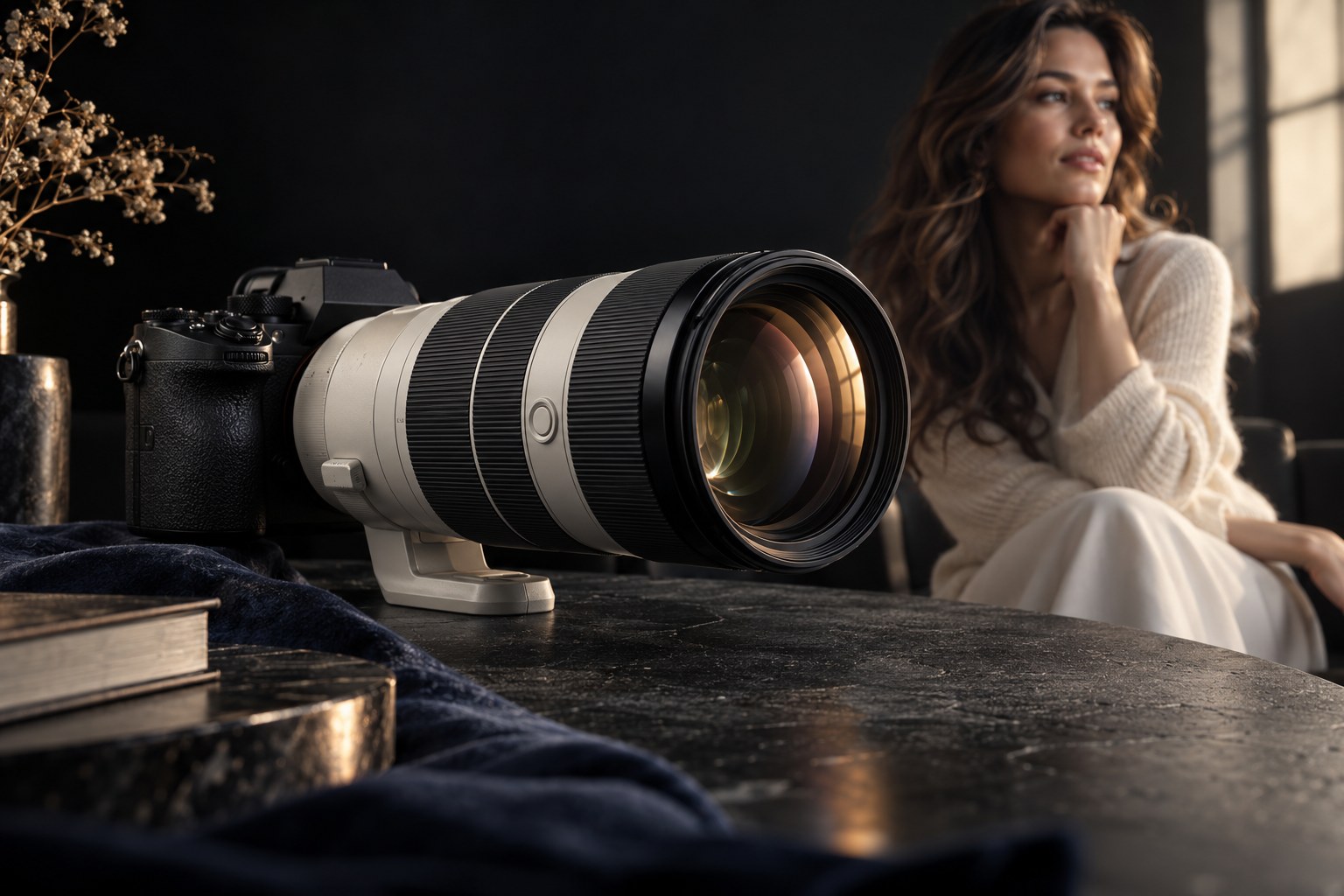
A lens can have wild specifications and still be the wrong tool for your actual work.
Sony’s FE 50-150mm F2 GM is interesting because it pushes a familiar professional zoom idea in a different direction: instead of the classic 70-200mm F2.8 formula, it starts wider at 50mm, stops at 150mm, and holds a constant F2 aperture across the range.
Sony lists the full-frame E-mount lens at 1,340 grams without the tripod mount, with four XD linear motors, an 11-blade circular aperture, a 95mm filter thread, and minimum focusing distance from 0.4m at the wide end to 0.74m at the telephoto end. Sony announced it in April 2025. See the official Sony specifications for the current details.
Those numbers matter. But the better question is what they change when you are actually photographing a person, covering an event, or building a video sequence.
| Specification | What it means in practice |
|---|---|
| 50–150mm | Medium environmental frames through compressed portraits |
| Constant F2 | One extra stop over F2.8 across the zoom range |
| 1,340g | A serious weight before the body, cage or support |
| 95mm filter thread | Budget for larger ND, diffusion or CPL filters |
| 0.4–0.74m minimum focus | Useful close focus across the range |
| Four XD linear motors | Fast, precise autofocus hardware for photo and video |
01 / The 50-150mm range changes how you work
Starting at 50mm makes this lens more flexible in tighter environments than a 70-200mm. At an event, 50mm can handle a medium environmental frame without forcing you as far backward. Move toward 85–105mm and you enter classic portrait territory. At 135–150mm, compression can simplify backgrounds and isolate a subject.
That makes the lens especially interesting for portraits, weddings, performances, fashion, corporate events and lifestyle coverage where the photographer moves between medium and tight frames quickly.
It does not replace a true wide angle. In a small room, 50mm can still be too tight. A second body or wider lens may remain necessary.
GEAR / One zoom, four framing jobs

Use the visual break to connect the specification with the way the lens changes the frame.
Think of the range as a sequence of decisions: establish at 50mm, settle around 85–105mm, then compress the background at 135–150mm.
02 / Why F2 matters
The difference between F2 and F2.8 is one stop of light.
In practical terms, that can mean using a faster shutter speed at the same ISO, lowering ISO while keeping the same shutter speed, or creating shallower depth of field at comparable framing.
For concert and event photography, that extra stop can be valuable when movement and dim light collide. A performer does not care that the venue is dark. If the shutter speed drops too far, motion blur becomes the problem. For portraits, F2 also gives you another way to separate a subject from a busy environment.
But F2 is not automatically better. At close distances, depth of field becomes thin enough that small focus errors or subject movement matter. Group photos may need F4, F5.6 or more regardless of what the lens can do.
LIGHTING / F2 and F2.8 change the margin

Use the visual break to connect the specification with the way the lens changes the frame.
Use the visual break to compare the background separation and exposure headroom, while remembering that aperture does not replace thoughtful lighting.
03 / Portraits: this is where the range makes sense fast
For portrait photographers, 50–150mm covers a useful sequence without a lens change.
At 50mm, include more wardrobe and environment. Around 85mm, build a clean half-body or head-and-shoulders portrait. Push toward 135–150mm when you want stronger compression and a quieter background.
That flexibility can help during fast client sessions because you can change the visual language by changing your position and focal length instead of interrupting the flow.
The mistake would be treating every portrait like it belongs at 150mm and F2. The environment is part of the story too. The one-light portrait setup remains the bigger decision when you are shaping the face.
LOOK / Four focal lengths, one portrait

Use the visual break to connect the specification with the way the lens changes the frame.
Compare how 50mm, 85mm, 105mm and 150mm change the relationship between subject, background and frame.
04 / Events and concerts: the F2 advantage has a cost
Low-light event work is an obvious use case. F2 can help maintain a workable shutter speed under stage LEDs, dim receptions or indoor venues.
Sony says the lens uses four XD linear motors for fast, precise autofocus. That is relevant when subjects are moving and the photographer is reframing constantly.
The tradeoff is physical: 1,340g is roughly three pounds before the camera body. Add a full-frame body, batteries and another lens and the kit gets serious quickly.
For a 20-minute portrait session, that may not matter much. For a six-hour event, balance, strap choice and how often you can put the camera down become part of the buying decision.
TECHNIQUE / Reframe without changing lenses
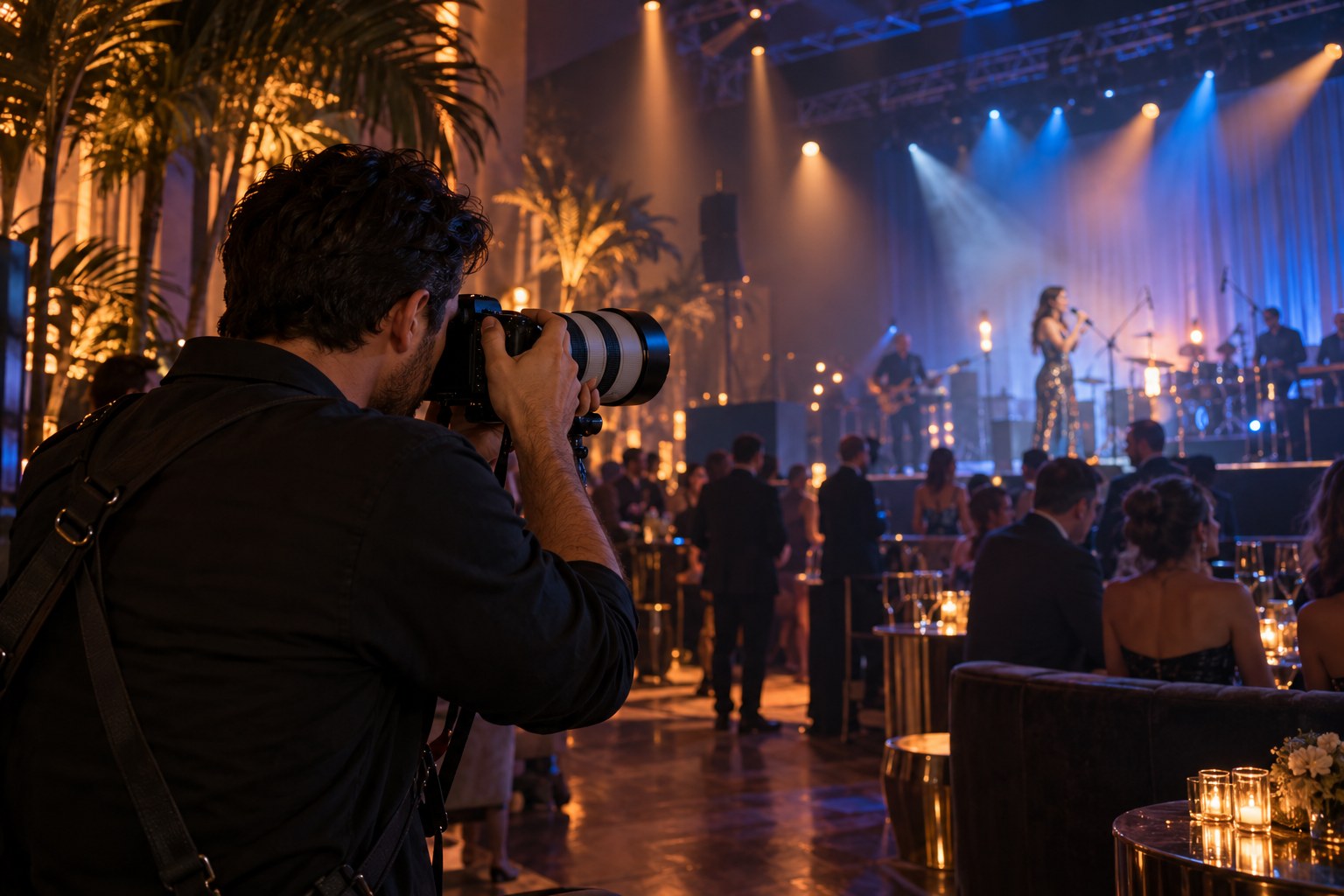
Use the visual break to connect the specification with the way the lens changes the frame.
Notice how the same zoom can move from a medium room-wide moment to a tight stage reaction while you stay in position.
05 / Video: more interesting than the spec sheet suggests
Sony specifically highlights stable autofocus and minimized focus breathing for movie use.
For video, the range can cover interviews, fashion details, performance footage, event reactions and compressed establishing shots. F2 also gives creators more low-light flexibility and shallow-depth-of-field control.
But the weight matters even more in motion work. A 1,340g lens changes handheld fatigue and may push a gimbal setup beyond the comfortable range for some operators.
Think in systems, not isolated specifications: body + lens + cage + monitor + microphone + battery + support.
A lens can be excellent for video and still be the wrong lens for your gimbal. Build the sequence with the one-camera B-roll workflow in mind before you decide the lens is the answer.
06 / What the 95mm filter thread means
Sony lists a 95mm filter diameter. That matters if your current ND, diffusion or CPL filters are 67, 77 or 82mm.
You may need new filters or a step-up strategy. For video shooters who use variable ND or diffusion frequently, that extra accessory cost belongs in the budget. This is the boring part of gear buying that becomes expensive after checkout.
07 / What it does not do
The FE 50-150mm F2 GM does not include optical SteadyShot in the lens; Sony’s specification page points to body-integrated stabilization. It is also not compatible with Sony’s 1.4x or 2.0x teleconverters.
Those details matter if you are imagining it as one lens that can stretch into every sports or wildlife situation. It is a fast professional mid-telephoto zoom, not a replacement for every telephoto tool.
08 / Who should seriously consider it?
This lens makes the strongest case for photographers and filmmakers who regularly work with people and need both speed and framing flexibility. Strong fits include:
- Portrait and fashion photographers
- Wedding and event photographers
- Concert and performance photographers
- Hybrid photo/video creators
- Commercial creators who value F2 and fast reframing
- Sony shooters who would otherwise carry multiple fast primes in this range
It makes less sense when compact size is the priority, you rarely need F2, most of your work is wider than 50mm, or a 70-200mm F2.8 already solves your real problems.
09 / The buying test
Before buying any expensive lens, look at your last few thousand photographs.
Which focal lengths did you actually use? How often did ISO become the limiting factor? How often did F2.8 feel too slow? How often did you switch between an 85mm and 135mm prime? How long are your typical assignments? Would the weight affect how you shoot?
Gear should remove friction from your workflow. If the lens solves a problem you repeatedly encounter, the price has context. If it solves a problem you only discovered while watching launch videos, save the bread.
GEAR / Test the problem before the purchase
Use the visual break to connect the specification with the way the lens changes the frame.
Shortlist the lens only when the aperture, range and carry weight answer problems you can point to in your own archive.
10 / A Flicks by Ed workflow example
For an environmental portrait session, start near 50mm to establish the setting. Move into the 85–105mm range for the core portraits. Finish around 135–150mm for tighter frames and stronger compression.
For an event, use the wider end for interactions and the longer end for reactions or stage moments you cannot physically approach.
For video, build sequences instead of random clips: medium establishing frame, tight expression, detail, reaction and compressed cutaway.
The lens does not create the story. It simply gives you a useful range of perspectives without forcing a lens change between every beat. Pair it with the Sony Alpha 7 V hybrid guide when you are evaluating the body and lens as one system.
Final take
The Sony FE 50-150mm F2 GM is not compelling because F2 looks impressive on a product page. It is compelling because a constant F2 zoom across 50–150mm can combine several common portrait and event focal lengths into one fast lens.
The tradeoffs are just as real: weight, 95mm filters, no teleconverter support, and a focal range that still requires something wider for many environments.
Buy for the work you actually do. That is the difference between collecting gear and building a kit. You bring the vision. I’ll create the moment.
Keep building the kit
Compare the lens with the Sony Alpha 7 V hybrid guide, revisit the one-light portrait setup, and use the portrait and video services when you want the whole production handled.