GUIDE 09 / Composition / Creative Technique
Photography Composition for Portraits: 7 Ways to Make Photos Feel More Cinematic
Learn seven practical photography composition techniques for cinematic portraits, including framing, layers, negative space, leading lines, perspective, movement and visual balance.
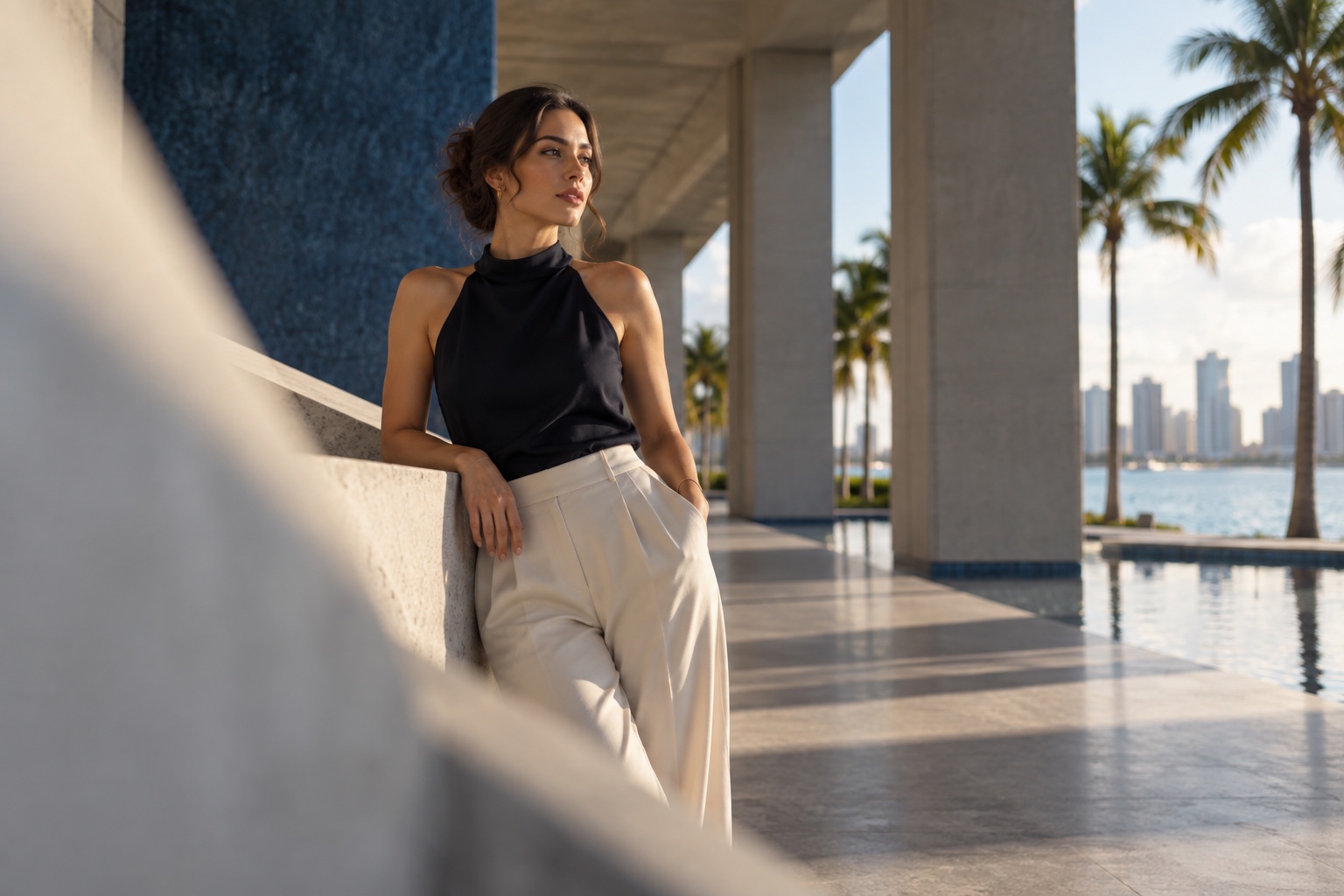
A sharp photo is not automatically a strong photo.
You can have perfect focus, expensive glass and beautiful light, and still make an image that feels flat. Composition decides where the eye lands, how the frame moves, and whether the environment adds to the story or simply sits behind the person.
For portrait work, composition is especially powerful because the subject is only one part of the frame. Architecture, foreground objects, shadows, color, empty space and even blur can all help direct attention.
Here are seven photography composition techniques I use when I want a portrait to feel less like “person standing in front of background” and more like a finished frame.
1. Use foreground layers to create depth
A quick way to make a portrait feel more dimensional is to put something between the lens and the subject. That foreground can be a doorway, foliage, glass, railing, fabric, another person, a reflective surface or a deliberately blurred object close to the lens.
The point is not to cover the subject randomly. The foreground should create an entrance into the frame. When foreground, subject and background occupy different distances from the camera, the image gains layers. With a wider aperture, the foreground can soften into shape and color while the subject remains clear.
LOOK / Foreground layers create depth

Use the visual break to compare what the frame is doing with what the subject is doing.
2. Let leading lines do the pointing
Road markings, building edges, stair rails, shadows, hallways and repeating architecture can guide the viewer toward the subject. The useful question is not “Are there leading lines?” It is “Where do those lines end?”
If every strong line pulls the eye out of the frame, the geometry is working against the portrait. Shift your camera position until the lines support the person. In an urban environment, a change of only a few feet can turn messy architecture into a deliberate visual path.
TECHNIQUE / Leading lines point the eye
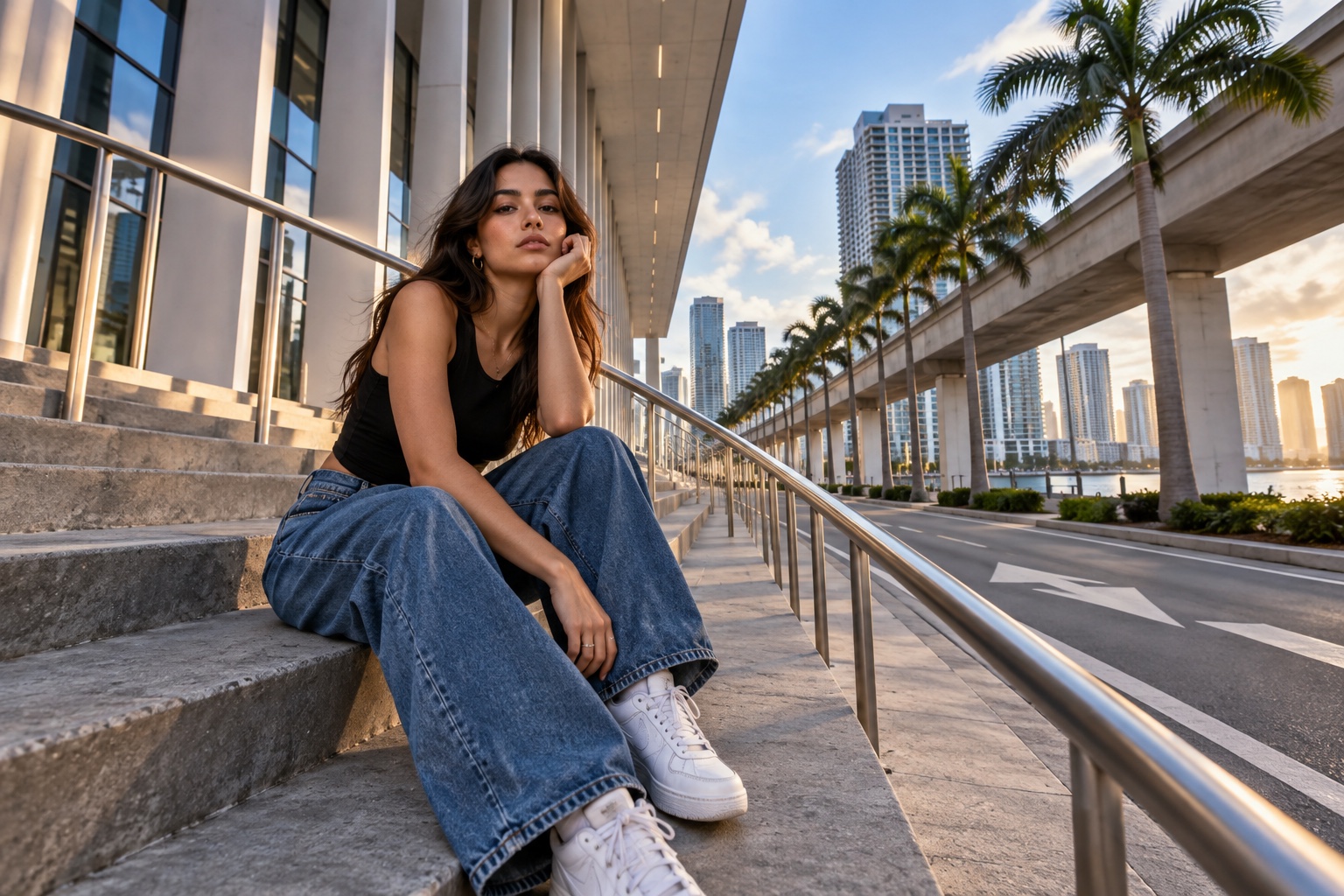
Use the visual break to compare what the frame is doing with what the subject is doing.
3. Use negative space on purpose
Not every inch of the frame needs information. Negative space can make a portrait feel calmer, more editorial and more intentional. It can also give the subject visual weight without making them physically large in the frame.
Try placing the person off-center against a clean wall, open sky, dark shadow or broad architectural surface. Pay attention to the direction they are facing: leaving space in front of the gaze or movement often feels more natural than crowding that side of the frame. Negative space is also useful when an image may later carry typography for a campaign, cover or announcement.
LOOK / Negative space creates breathing room

Use the visual break to compare what the frame is doing with what the subject is doing.
4. Frame the subject inside the frame
Doors, windows, mirrors, arches, fences and gaps between objects can create a second frame inside the photograph. This organizes a busy scene and immediately tells the viewer where to look.
The frame does not need to surround the person perfectly. Partial framing can feel more natural. A dark doorway on one side and overhead architecture on another may be enough to contain the subject visually. Check the edges carefully so a pole, branch or architectural line does not appear to grow out of the subject’s head.
TECHNIQUE / Frame within the frame

Use the visual break to compare what the frame is doing with what the subject is doing.
5. Change camera height before changing the location
Photographers sometimes abandon a scene too quickly. Before moving, change the camera position. Shoot low and architecture becomes more dominant. Shoot slightly above and the ground can become a graphic element. Step closer with a wider lens and the environment stretches around the person. Step back with a longer focal length and background elements compress.
Perspective is composition. The choice should still flatter the person: an extreme wide-angle perspective close to a face can distort features, while a deliberately low angle can add confidence and scale when used with intention.
GEAR / Camera height changes perspective
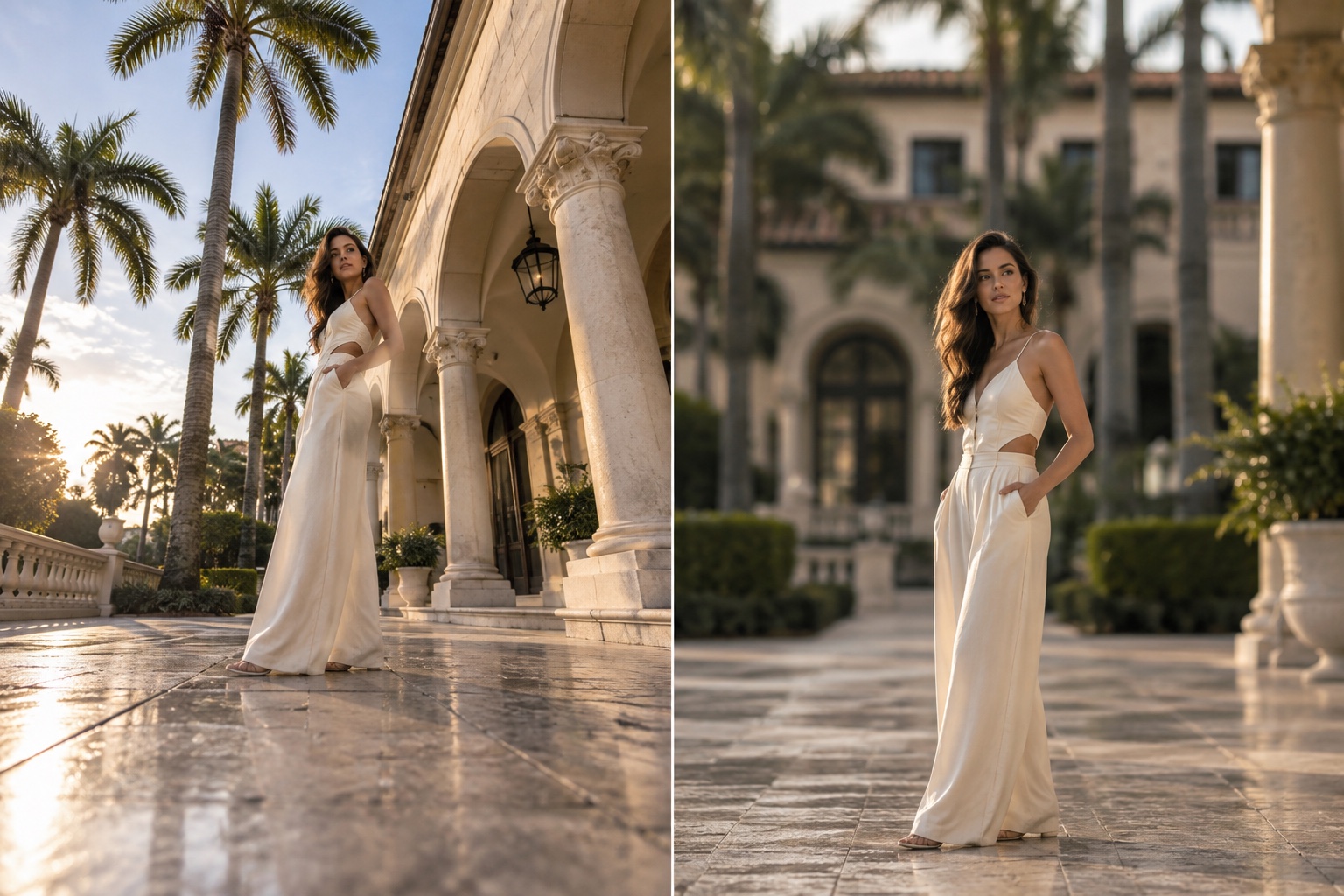
Use the visual break to compare what the frame is doing with what the subject is doing.
6. Compose for movement, not just the pose
A cinematic frame often feels like something happened immediately before it—or is about to happen immediately after it. Instead of always asking a subject to freeze, build space for movement.
Have them walk through the frame, turn into the light, adjust a jacket, step off a curb, move fabric, look back or interact with the environment. Compose slightly ahead of the action. If the subject is walking left to right, leave room for them to move into the photograph instead of trapping them against the edge.
Burst mode can help, but timing matters more than spraying hundreds of frames. Watch the stride, clothing, hands and expression and shoot through the strongest part of the movement.
LOOK / Compose for movement
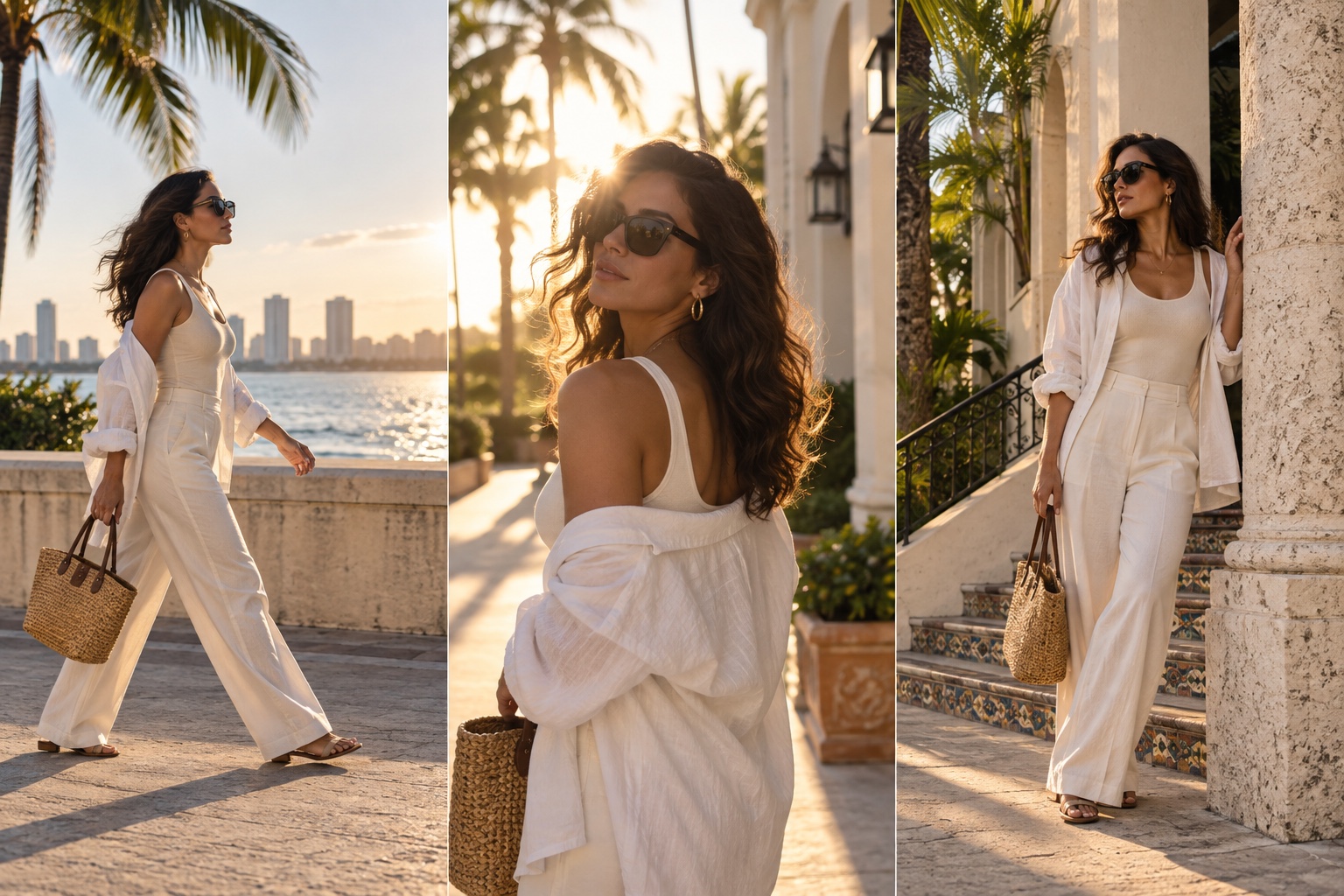
Use the visual break to compare what the frame is doing with what the subject is doing.
7. Build visual balance without making everything symmetrical
Balance does not mean placing the subject dead center. A person on one side of the frame can be balanced by a bright area, architecture, color, another person, signage or a strong shadow on the other. Think in visual weight.
A tiny neon sign can pull attention harder than a large dark wall. A bright white object near an edge can compete with a face. A saturated color can become the second subject without you realizing it.
Before taking the photo, scan the entire frame—not only the person. An edge check at all four sides of the viewfinder makes small distractions much easier to catch.
TECHNIQUE / Balance the visual weight
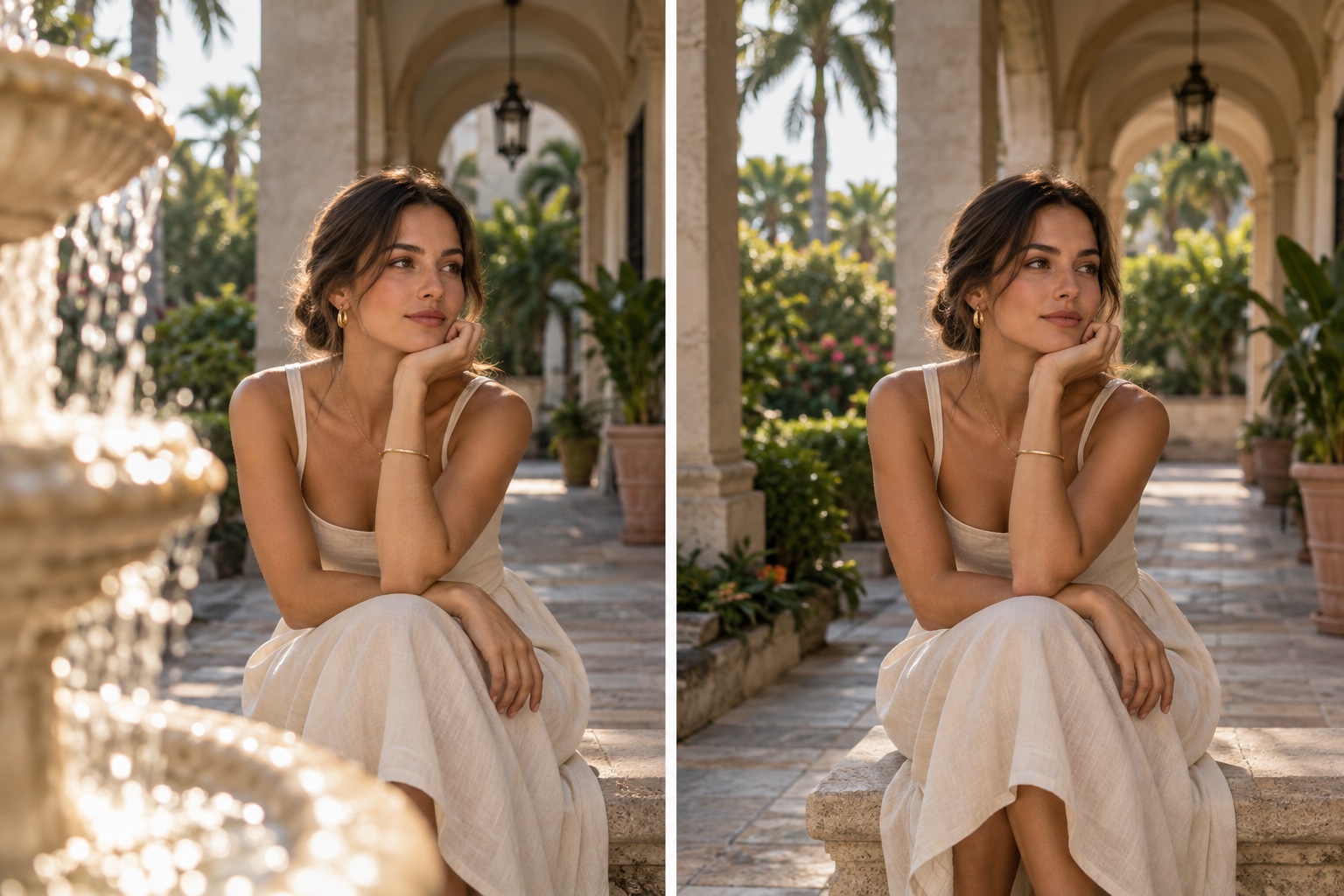
Use the visual break to compare what the frame is doing with what the subject is doing.
Composition is not a checklist
Rules like the rule of thirds, symmetry and leading lines are useful because they give photographers a language for organizing a frame. The goal is not to force every photograph into a grid.
Sometimes the strongest portrait is centered. Sometimes the horizon is intentionally high. Sometimes the subject is tiny. Sometimes the foreground is almost abstract. Learn what each technique does to the viewer’s attention, then decide whether that effect serves the photograph.
A practical composition routine on set
When a location looks promising, try this sequence before moving on:
- Make the safe frame: clean subject, clean background, reliable composition.
- Step wider and show more environment.
- Look for foreground.
- Change camera height.
- Search for lines or a natural frame.
- Move the subject off-center and test negative space.
- Add movement.
- Finish with one unusual angle or crop.
You do not need to keep every variation. The point is to prevent the first obvious composition from becoming the only composition.
LOCATION / One location, four compositions
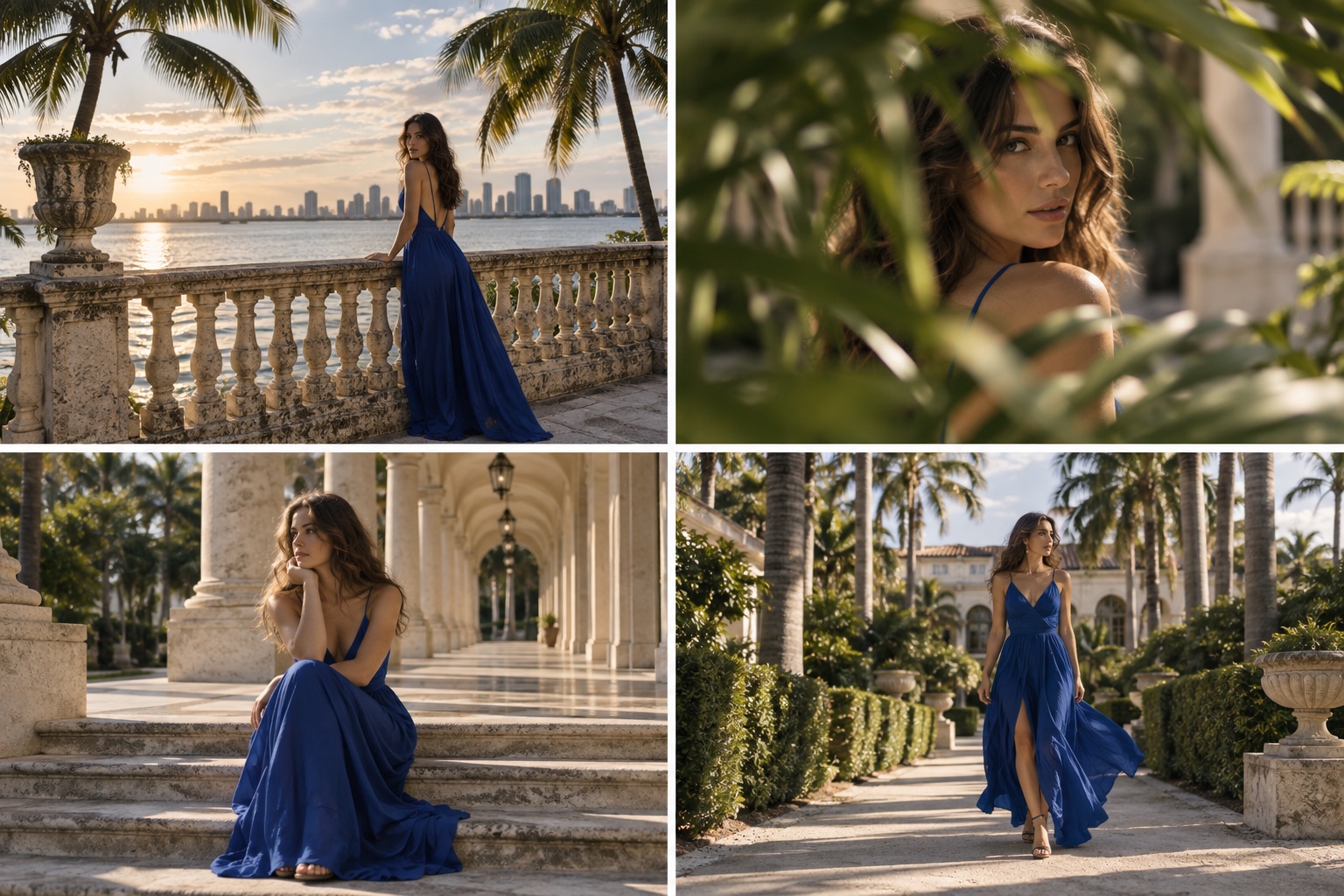
Use the visual break to compare what the frame is doing with what the subject is doing.
Photography composition for portraits FAQ
What are the best composition techniques for portraits?
Start with foreground layers, leading lines, negative space, framing, camera perspective, movement and visual balance. Use the technique that supports the person and the story of the location.
How do you make portraits look cinematic?
Give the frame depth, leave intentional space, use the environment as part of the story, and compose for a moment before or after the pose. Cinematic feeling comes from relationships inside the frame, not from a single preset.
Is the rule of thirds good for portraits?
Yes, it is a useful starting point for placing a subject and creating breathing room. Treat it as a guide rather than a requirement; centered or deliberately off-balance portraits can be stronger when the concept calls for them.
How do you use leading lines in portrait photography?
Find rails, edges, shadows, roads or repeating architecture and change your camera position so they end near the subject. If the lines lead out of the frame, reposition until they support the face and the story.
Final take
Better composition is less about memorizing rules and more about learning to notice what the frame is doing. Where does the eye go first? What competes with the face? Does the environment create depth? Is there enough breathing room? Does the camera position make the person and location feel intentional?
Once those questions become automatic, ordinary locations start giving you more options. That is the part I love: finding the frame inside the scene.
At Flicks by Ed Media, creative direction is not only about posing the person. It is about deciding how the entire image supports them. You bring the vision. I’ll create the moment.
Keep building the portrait
Connect the frame to the rest of the shoot: read One Light, Expensive Look, use Cinematic Video With One Camera for motion coverage, review the Lightroom masking workflow, and explore portrait and video services.