GUIDE 013 / Event / Coverage
Event Photography Shot List: How to Capture the Moments That Actually Matter
Use this practical event photography shot list to plan stronger coverage, capture real reactions, and build a complete visual story from arrival to final frame.
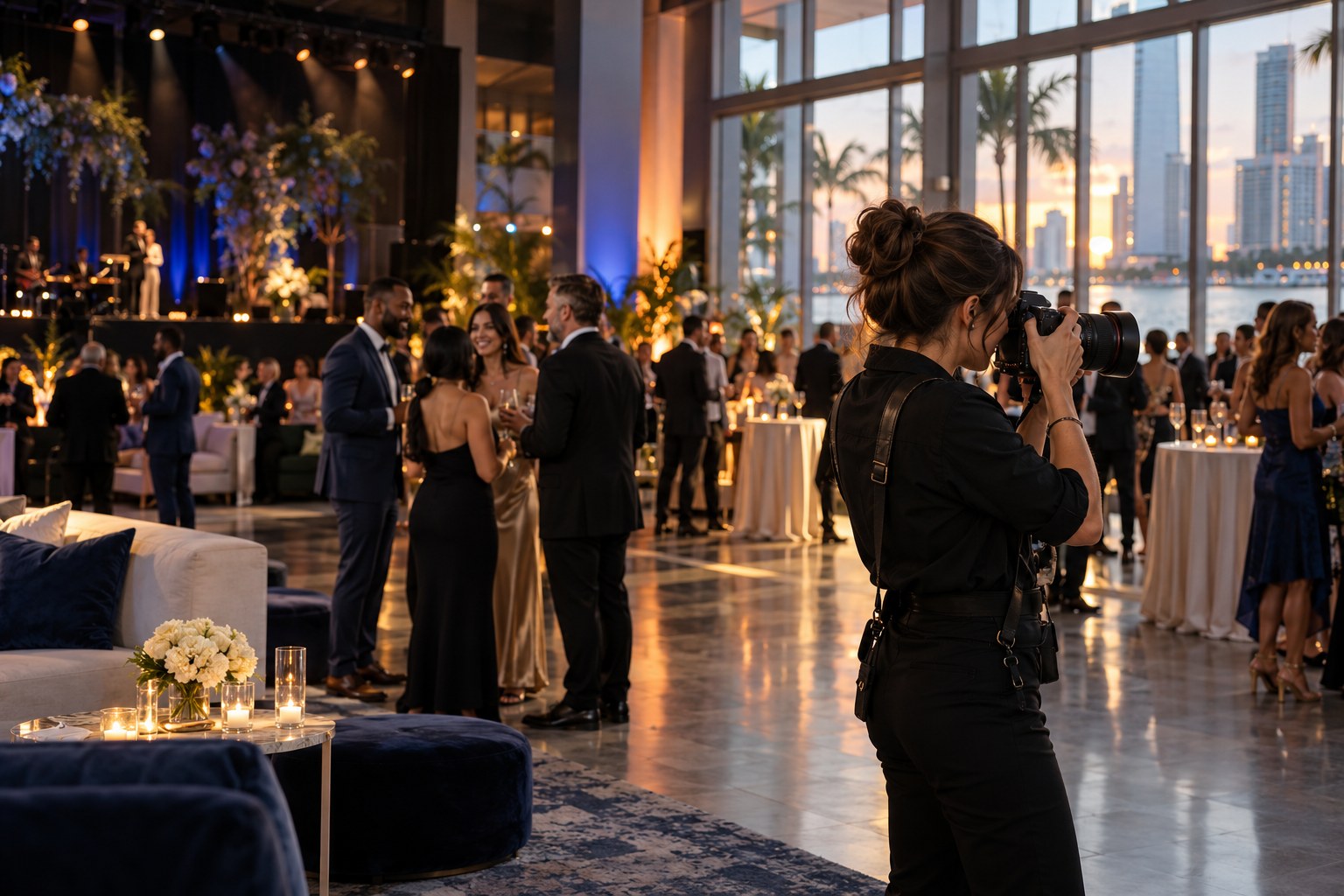
Good event photography is not just a folder full of technically sharp pictures. It is a visual record of what the room felt like.
The strongest galleries give you context, people, reactions, details, movement and the moments nobody had time to stage. That requires more than walking around with a camera waiting for something photogenic to happen. It requires coverage.
At Flicks by Ed Media, I think about an event like a short film made of still frames: establish the world, introduce the people, find the emotion, capture the turning points and leave with an ending. This event photography shot list is a practical framework for doing exactly that.
01 / Start with the establishing shots
Before the room fills up, capture the environment.
Get the exterior or entrance, a wide view of the venue, the stage or main activity area, signage, tables and décor, and any branded details that identify the event.
These images may not be the loudest frames in the gallery, but they answer an important question: where are we?
LOCATION / Establish the room before it fills
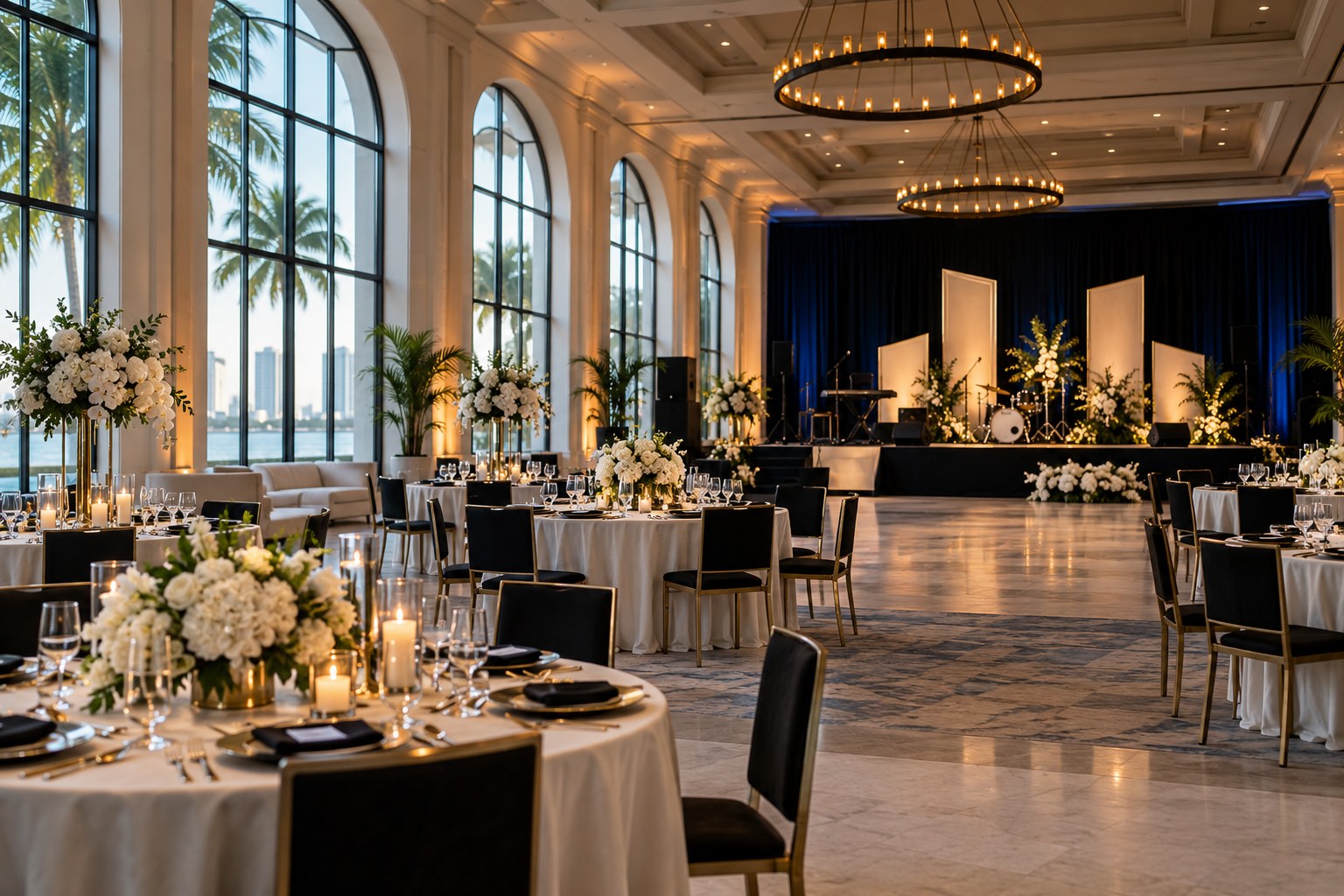
Use the visual break to connect the checklist with the feeling of the event.
The first frame gives the rest of the gallery a place to happen. Look for architecture, depth, light and the details that make this event different from the next one.
02 / Photograph the details before people touch them
Details have a short shelf life.
Cake gets cut. Drinks move. Place settings change. Programs disappear. Products get picked up. Flowers shift. Branded displays become crowded.
Photograph the important details early while they still look intentional. A useful detail checklist includes invitations or signage, florals, food and drinks, awards, merchandise, products, table settings, custom décor, sponsor branding and personal items with meaning.
LOOK / Details have a short shelf life
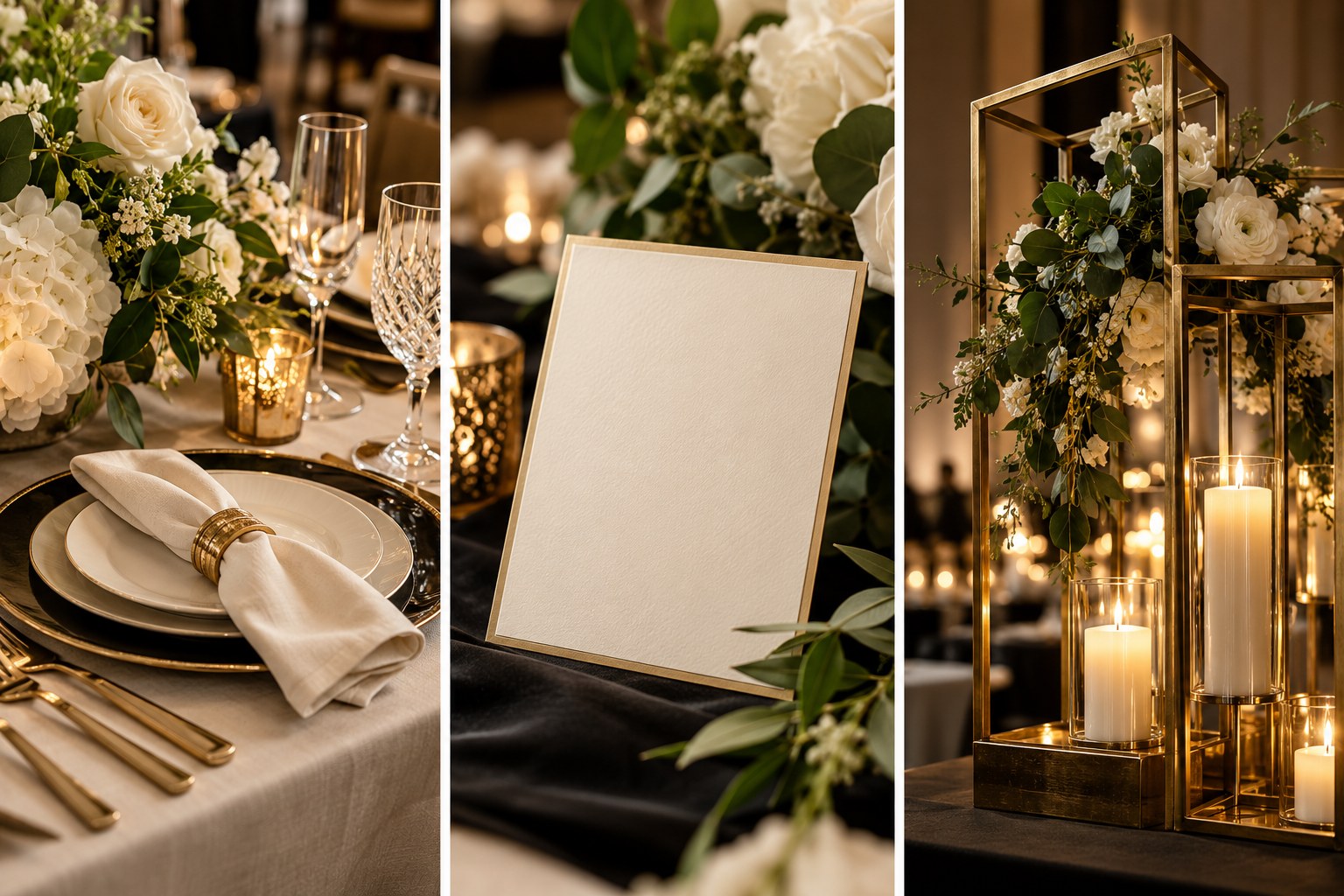
Use the visual break to connect the checklist with the feeling of the event.
Treat details as visual punctuation. A few tight, deliberate frames can explain the care behind an event better than a hundred general room shots.
03 / Get the people who matter first
Every event has priority people.
For a birthday, that might be the person celebrating and immediate family. For a corporate event, it could be executives, speakers, sponsors and VIP guests. For a concert, it is the artist, supporting performers and key production moments.
Know who those people are before the event gets busy. A five-second introduction from the organizer can save you from discovering afterward that the person you photographed all night was somebody's cousin while the actual CEO appeared in three background frames.
TECHNIQUE / Name priority people before doors open
BEFORE THE DOORS OPEN
A five-second organizer briefing can protect the photographs that matter most.
Ask the organizer for the names, reference photos and must-have moments. Keep the list short enough to use while you are moving.
04 / Build every scene wide, medium and tight
One of the easiest ways to make an event gallery feel complete is to cover important moments at multiple distances. WIDE shows the environment and crowd. MEDIUM shows the person and what they are doing. TIGHT shows expression, hands, details and emotion.
If somebody gives a speech, do not make 40 versions of the same medium frame. Photograph the room, the speaker, the audience reaction, hands on the microphone, applause and the interaction afterward. That is coverage. The sequence tells the story better than one perfect frame repeated all night.
Use the same wide, medium and tight thinking for arrivals, performances, awards, cake cutting and the dance floor.
05 / Reactions are often better than the main action
When everybody turns toward the cake, stage, toast or surprise, it is tempting to point the camera at the obvious subject and stay there. Get the obvious frame. Then turn around.
Parents reacting to a speech. Friends laughing at a joke. Somebody wiping away a tear. A crowd exploding when the beat drops. A kid watching the birthday candles. Those secondary moments are often the photographs people save.
LOOK / Photograph the reaction, not only the action
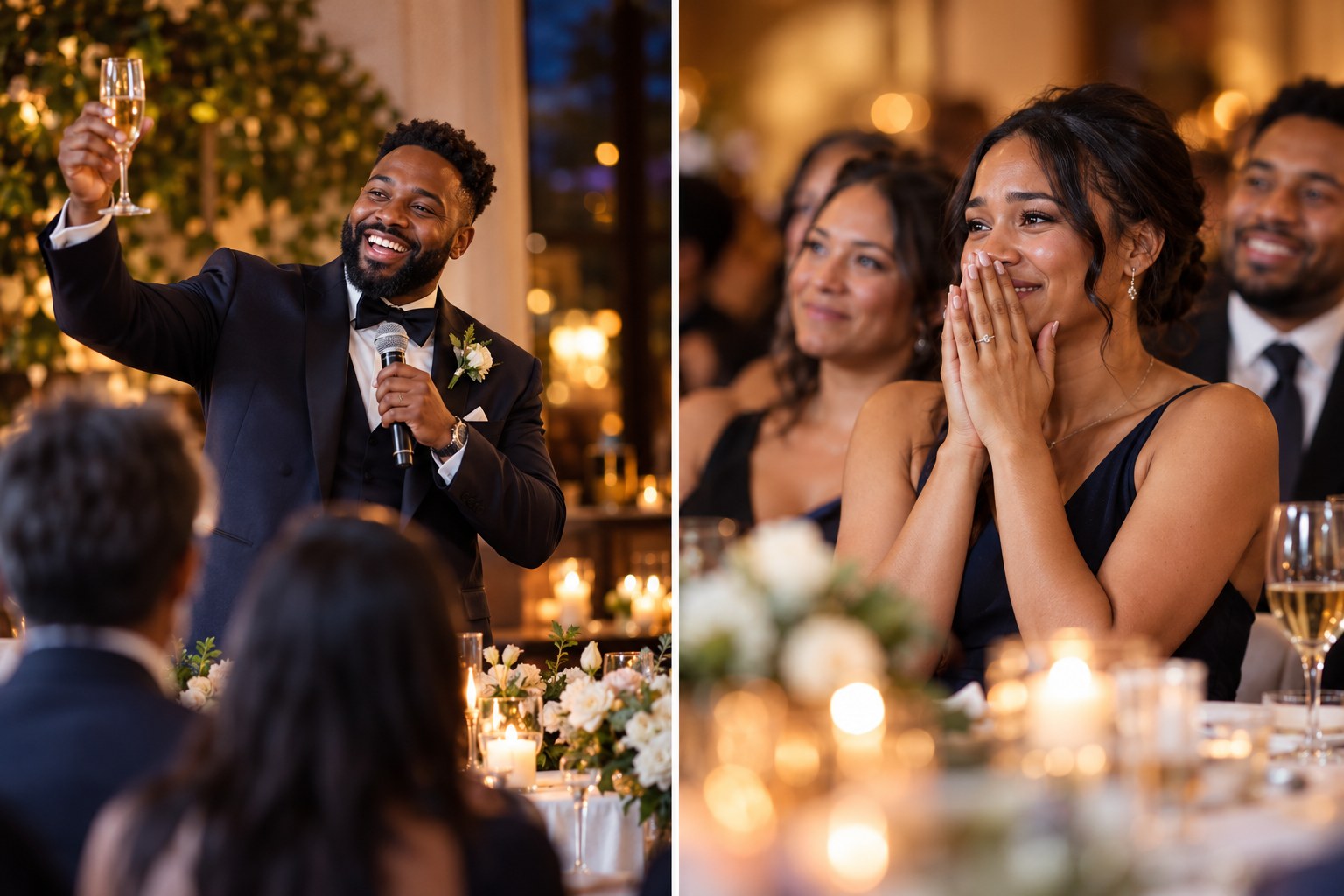
Use the visual break to connect the checklist with the feeling of the event.
Think of the event as two scenes happening at once: the person creating the moment and the people receiving it.
06 / Use candid and directed photography together
“Candid” does not have to mean invisible photographer. Some moments should be observed. Others benefit from five seconds of direction.
For groups, clean up the spacing, check hands, move distractions and make sure everybody can actually see the camera. Then get the safe frame quickly so people can return to the event.
For individuals, a small direction like “turn toward the light,” “bring your shoulders this way,” or “keep talking to each other” can create a natural-looking photograph without turning the event into a portrait session.
The goal is not to control the whole night. It is to know when direction improves the frame. The one-light portrait setup is useful when a quick directed portrait needs more shape.
07 / Anticipate the moment instead of chasing it
Event photographers work better when they know what happens next.
Read the timeline. Ask about surprises. Know when speeches, entrances, performances, cake cutting, awards or announcements are scheduled.
Then get into position before the moment starts. If the first time you hear about the confetti cannon is when it fires, the confetti already cooked you.
TECHNIQUE / Read the timeline before it happens
COVERAGE RHYTHM
Use the timeline as a flexible sequence, not a rigid checklist.
Build a simple sequence: arrival, details, people, program, reactions, portraits and closing. Use it as a coverage rhythm rather than a rigid checklist.
08 / Watch your backgrounds
Events are full of visual clutter: exit signs, half-empty cups, speaker stands, cables, phones, people walking through frames and bright screens. You cannot remove the real world, but you can change your angle.
Move a step left. Lower the camera. Use a longer focal length. Wait for somebody to clear the frame. Use a doorway or foreground element to hide clutter.
Background control is one of the fastest ways to make documentary coverage feel editorial. The one-camera B-roll workflow uses the same idea: every angle should have a job.
09 / Light for consistency, not just brightness
Event lighting can change every few feet.
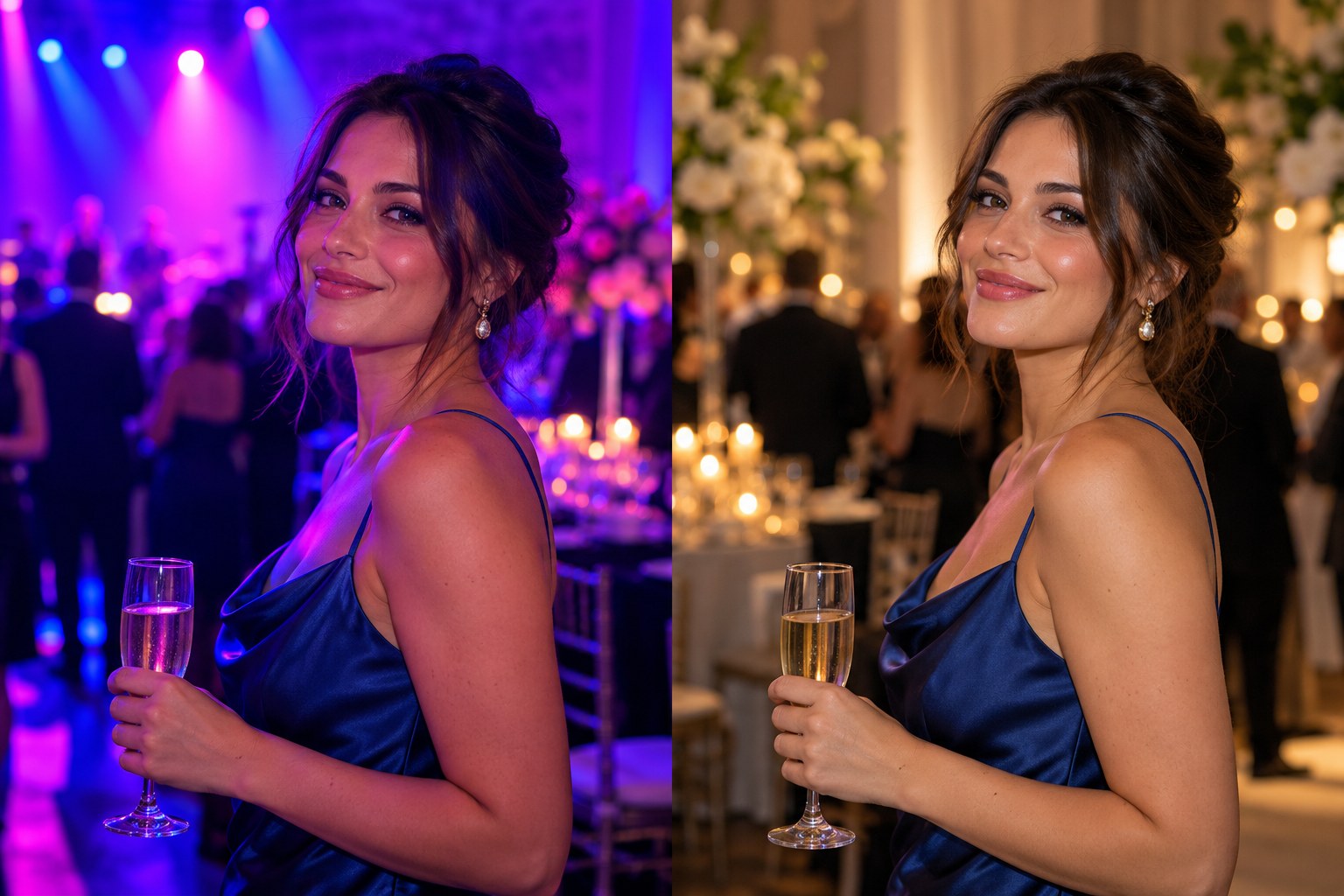
A ballroom may have warm overhead lights, cool LED screens, window light and DJ lighting in the same room. Decide what matters most in each scene and avoid constantly chasing every color cast.
When flash is permitted and appropriate, it can create consistency and separation. When ambient light is part of the atmosphere—especially concerts and performances—preserving that color may tell the story better.
The goal is not to make every room look neutral. The goal is to keep skin believable while preserving the feeling of the space.
LIGHTING / Protect atmosphere and believable skin
Use the visual break to connect the checklist with the feeling of the event.
Choose a visual priority for each scene, then expose and balance around it. Consistency gives a gallery room to breathe.
10 / Do not forget the transitions
Some of the best storytelling photographs happen between scheduled moments.
Guests entering. A performer walking backstage. Staff making last-minute adjustments. Friends moving from dinner to the dance floor. Somebody fixing another person's outfit. The quiet room after the crowd leaves. Transitions make a gallery breathe. If every image is a peak moment, the story has no rhythm.
11 / The practical event photography shot list
Before guests arrive:
- Exterior or entrance
- Empty venue wide
- Stage or focal area
- Décor and signage
- Food, drinks and details
- Branding or sponsor elements
As guests arrive:
- Arrivals and greetings
- Priority people
- Small groups
- Natural interactions
- Venue filling up
During the program:
- Speakers or performers
- Wide room context
- Medium action
- Tight details
- Audience reactions
- Applause and laughter
- Awards, cake, surprises or key rituals
Portrait coverage:
- Host or client
- VIPs
- Immediate family or team
- Requested groups
- Quick individual portraits
Closing coverage:
- Dance floor or late-event energy
- Final interactions
- Venue atmosphere
- One strong ending frame
12 / What clients should tell their event photographer
A photographer can work from experience, but a little information before the event makes coverage stronger.
Share the timeline, names or photos of priority people, surprise moments, important décor or sponsors, any restrictions on flash or movement, and the images you absolutely need.
If there is one photograph that would make you upset if it were missing, say it before the event. That is not micromanaging. That is useful creative direction.
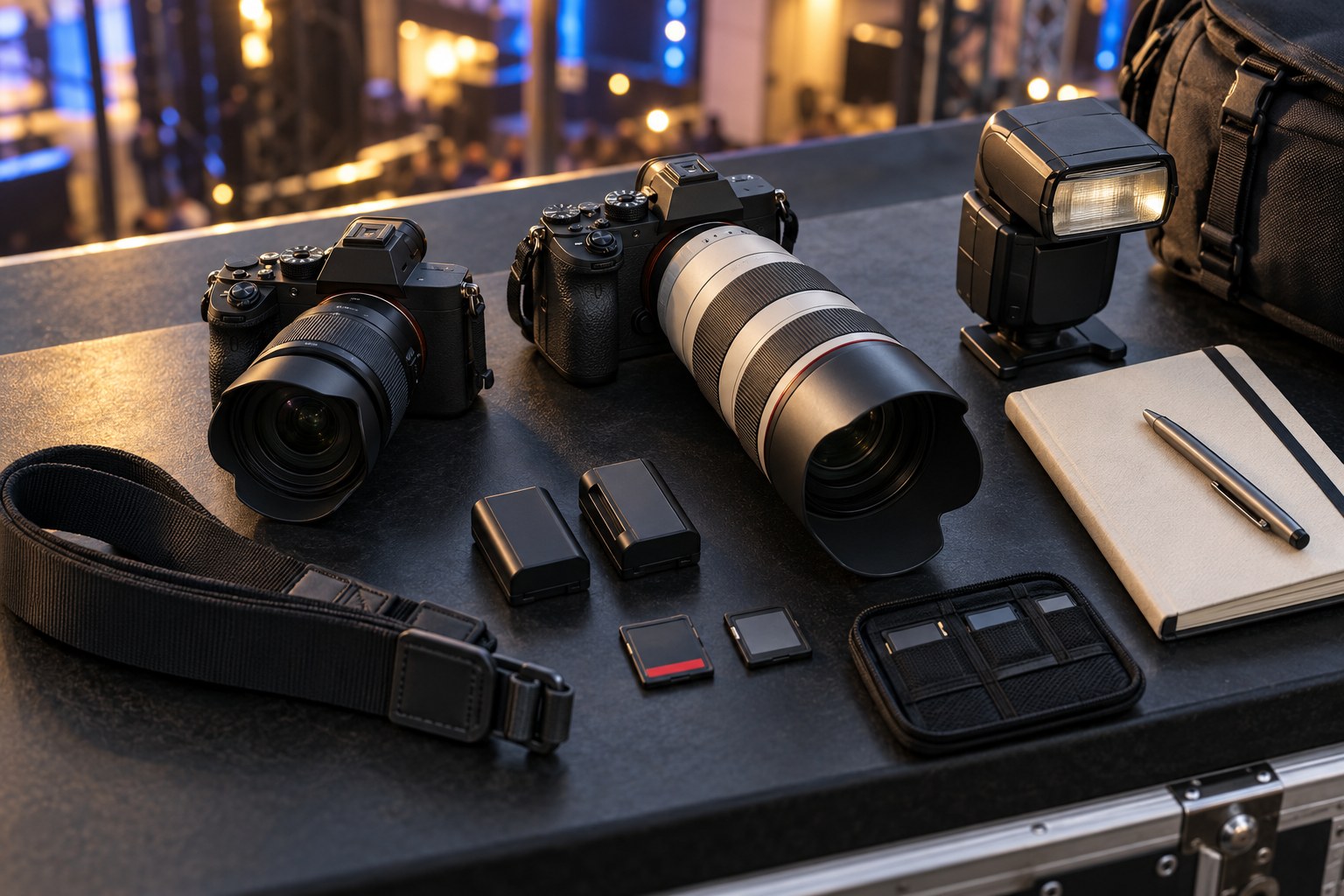
GEAR / Pack the working system, not every option
Use the visual break to connect the checklist with the feeling of the event.
For a live event, prepare the cameras, lenses, flash, batteries, cards and strap you can actually carry and reach. The Sony Alpha 7 V hybrid guide is a useful reference when you are building a photo/video kit.
13 / A complete gallery should feel like you were there
A good event gallery should work even for somebody who never attended.
They should understand the venue, who mattered, what happened, how people reacted and what the energy felt like.
That is why the shot list is not really about collecting boxes to check. It is about making sure the story has all its pieces.
Final take
Event photography rewards preparation, awareness and anticipation.
Get the safe photograph, but keep looking. Photograph the main action, then find the reaction. Get the wide frame, then move closer. Direct people when the image needs it and disappear into the room when the moment is already working. The camera records what happened.
The photographer decides what the story feels like. At Flicks by Ed Media, that balance—real moments with intentional coverage—is the whole point. You bring the moment. I'll make sure it does not disappear.
Plan your event coverage
Tell me the event, the people who matter and the moments you cannot miss. Check availability for event photography in Miami and South Florida.